Uneven shoulders, a tilted waist, or a visible bump along one side of the ribs may signal scoliosis in children. These early signs often appear subtle but require attention. As specialists in orthotics and prosthetics, the team at Horton's Orthotics & Prosthetics has helped countless Arkansas families by providing the bracing solutions children need after a scoliosis diagnosis. As parents and caregivers, learn what signs of scoliosis you should watch for and when to seek professional evaluation from a physician who can diagnose the condition and prescribe the appropriate orthotic treatment.
Key Takeaways:
- Early signs of scoliosis in children may include uneven shoulders or hips, rib humps, or clothes fitting unevenly.
- Most children with scoliosis do not have pain early on.
- Types of scoliosis: Idiopathic (unknown cause), Congenital (bone defects at birth), Neuromuscular (linked to conditions such as cerebral palsy).
- Idiopathic scoliosis is the most common; it often appears during puberty, especially in girls.
- School screenings can help but are not always done.
- Bracing and physical therapy are common non-surgical treatments; success depends on brace usage and growth stage.
- Surgery (usually spinal fusion) is used for curves over 45° that continue to grow.
- Emotional support improves treatment follow-through.
- Seek medical help if the spine appears curved or the body looks uneven.
Early Warning Signs of Scoliosis in Children
How Can Parents Identify Uneven Body Alignment?
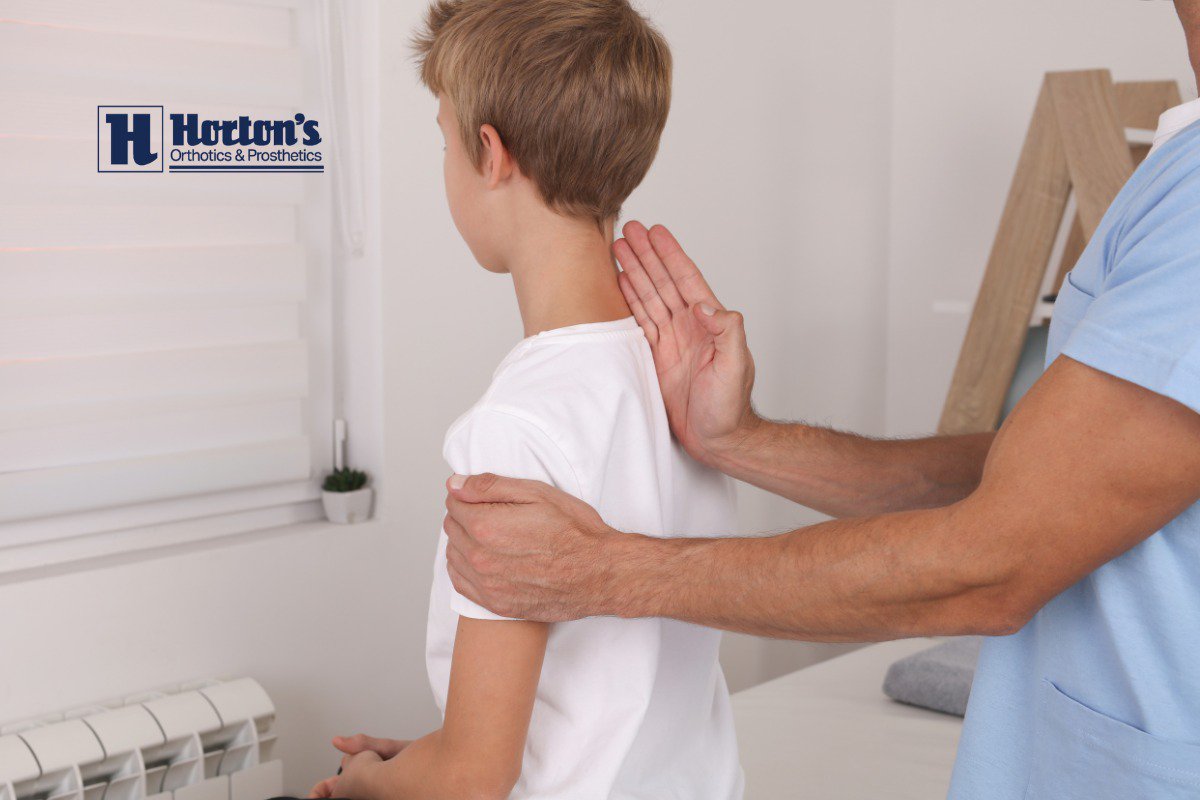
One shoulder sitting noticeably higher than the other often serves as the first visible indicator of scoliosis in children. Parents may also observe that one shoulder blade protrudes more prominently, particularly when the child bends forward during the Adams Forward Bend Test, a simple screening method used by physicians.
Uneven hips present another telltale sign. One hip may appear elevated or more prominent than the other. Many Arkansas parents first notice something unusual when their child's clothing hangs unevenly or shifts to one side despite proper fitting. Organizations like Horton’s Orthotics & Prosthetics offer support for you and your family.
What Does the Spinal Curve Look Like?
When viewed from behind, the spine may form a visible "S" or "C" curve rather than following a straight vertical line. This becomes most apparent when the child stands upright with arms relaxed at their sides. The waistline may appear asymmetrical, with one side looking compressed or pinched compared to the other.
A rib hump, where ribs on one side of the back protrude more prominently during forward bending, represents one of the most definitive physical signs of scoliosis in children. This prominence may initially escape notice but becomes more obvious as the curve progresses.
Does Scoliosis Cause Pain in Children?
Most children with scoliosis experience no pain during the early stages. This absence of discomfort allows the condition to progress undetected until visible physical changes become apparent. While some children may mention back tiredness or occasional soreness, pain is not a reliable early indicator. This painless progression makes visual screening and awareness of physical signs particularly important for early detection.
What Visible Changes Should Parents Monitor?
Parents should observe their child's posture regularly for these signs:
Postural indicators:
- Shoulders at different heights
- Head positioned off-center rather than aligned over the pelvis
- One-sided rib prominence during forward bending
- Apparent leg length discrepancy
- Clothing that consistently hangs unevenly
- One side of the back appearing higher than the other
Conduct these observations both while the child stands normally and during a forward bend. Taking photographs can help document subtle changes over time. If multiple indicators appear, schedule an evaluation with an orthotics specialist.
How Does Scoliosis Appearance Change With Age?
In very young children, scoliosis in children may remain undetectable because growth occurs gradually. School-age children often develop noticeable curves during rapid growth spurts, when scoliosis symptoms become more pronounced. Adolescents typically display the most obvious signs, including visible leaning, spinal curves, and head misalignment over the shoulders.
What Causes Scoliosis to Develop in Children?
Genetics play a significant role in scoliosis development. Approximately 30% of children with scoliosis have a family member with the condition. When scoliosis runs in families, physicians classify it as hereditary scoliosis. Children with an affected parent face increased likelihood of developing spinal curvature themselves.
What Are the Main Types of Scoliosis in Children?
Scoliosis in children stems from several distinct causes:
Idiopathic scoliosis accounts for the majority of cases. The cause remains unknown, though it often emerges during growth periods and may range from mild to severe. This type appears most frequently during adolescence, particularly affecting girls more than boys.
Neuromuscular scoliosis develops in children with underlying neurological or muscular conditions such as cerebral palsy or muscular dystrophy. Compromised muscle control allows the spine to shift out of alignment, often resulting in progressive curves.
Congenital scoliosis results from spinal bone malformations that occur before birth. While less common, this type may require early surgical intervention since bracing proves less effective for structural bone abnormalities.
Which Medical Conditions Increase the Risk of Scoliosis in Children?
Children with certain neurological or muscular disorders face elevated risk for developing scoliosis in children:
- Cerebral palsy
- Spina bifida
- Spinal cord injuries
- Duchenne muscular dystrophy
These conditions reduce natural spinal support, frequently causing progressive curvature over time. Additional risk factors include puberty growth spurts, female gender, low muscle tone, connective tissue disorders like Ehlers-Danlos syndrome, and spinal tumors or injuries.
Importantly, scoliosis is not caused by poor posture, sleeping positions, or wearing heavy backpacks. Understanding actual causes helps families in Arkansas and beyond seek appropriate care from specialists like those at Horton's Orthotics & Prosthetics.
How Do Specialists Diagnose Scoliosis in Children?
Physicians begin with a comprehensive physical examination. The Adams Forward Bend Test serves as a primary screening tool—the child bends forward at the waist while the examiner checks for spinal asymmetry and rib prominence.
When visual examination suggests curvature, specialists may use a scoliometer to measure the spine's degree of tilt. Readings above 5-7 degrees typically warrant further investigation through spinal X-rays. A Cobb angle measurement of 10 degrees or greater on X-ray confirms scoliosis diagnosis.
Are School Screenings Reliable for Detection?
School-based scoliosis screenings, typically conducted between fifth and ninth grades, identify some early cases but cannot replace comprehensive medical evaluation. Screening programs use the forward bend test to detect obvious asymmetries. However, not all schools offer these screenings, and some cases escape detection. Regular well-child visits with healthcare providers remain essential for consistent monitoring.
What Role Does Medical Imaging Play?
X-rays reveal the precise shape, location, and severity of spinal curves through Cobb angle measurement. MRI scans are reserved for cases involving neurological concerns such as pain, weakness, or signs of spinal cord abnormalities. Following diagnosis, children typically receive periodic X-rays, often every few months, to track curve progression during growth periods.
How Does Scoliosis in Children Progress During Growth?
Scoliosis in children tends to worsen during rapid growth phases, particularly during puberty. Girls experience peak growth between ages 10-14, while boys grow most rapidly from ages 12-16. A curve measuring 20 degrees at onset could potentially double without intervention during these critical years. Close monitoring becomes essential during accelerated growth periods.
How Do Specialists Track Curve Changes?
Orthotics specialists monitor scoliosis progression through serial X-rays that document Cobb angle changes over time. An increase of 5 degrees or more indicates active progression. Horton's Orthotics & Prosthetics works with families to track visible postural changes alongside radiographic measurements, creating a comprehensive understanding of each child's progression pattern.
When Does Spinal Growth Stop?
Spinal curves typically stabilize once skeletal maturity is reached. For girls, growth generally concludes approximately two years after menarche. Boys reach skeletal maturity later. Once growth plates close and sequential X-rays show stability, curves often remain unchanged throughout adulthood.
However, adolescents with curves measuring 45-50 degrees or greater may experience continued progression even after growth completion. These severe curves often require surgical intervention to prevent further deterioration and potential complications.
Non-Surgical Treatments for Scoliosis in Children
How Do Braces Control Curve Progression?
Bracing represents the primary non-surgical treatment for scoliosis in children with moderate curves (typically 25-45 degrees) who have remaining growth. The Boston Brace and Rigo Cheneau designs are among the most commonly prescribed orthoses. These custom-fitted braces hold the spine in improved alignment, preventing curve progression rather than correcting existing curvature.
Treatment success depends heavily on compliance. Braces must be worn 18-23 hours daily to achieve optimal results. Horton's Orthotics & Prosthetics specializes in custom brace fitting and provides ongoing adjustments to ensure proper fit as children grow. The team works closely with Arkansas families to maximize comfort and encourage consistent wear.
Can Physical Therapy Help Manage Scoliosis?
Exercise-based physical therapy builds core strength, improves posture, and may enhance respiratory function in children with scoliosis. Specialized programs like Schroth therapy teach children specific exercises that promote better spinal alignment through breathing techniques, targeted stretching, and strengthening exercises.
Therapists develop home exercise programs for daily practice, empowering children to actively participate in their own treatment. Consistent practice helps develop postural awareness and muscular support for the spine.
What Factors Influence Treatment Outcomes?
Three primary factors determine treatment effectiveness: the child's remaining growth potential, current curve severity, and treatment compliance. Young children with significant growth remaining require intensive monitoring and intervention. Larger curves demand more aggressive management approaches.
For bracing, wearing the orthosis consistently according to the prescribed schedule makes the difference between success and progression. For physical therapy, frequent practice and proper technique execution determine outcomes. Supportive communication between the child, family, and care team at Horton's significantly improves adherence and results.

When Does Scoliosis in Children Require Surgery?
Surgical treatment for scoliosis becomes necessary when curves exceed 45-50 degrees and continue progressing despite bracing attempts. Orthopedic surgeons also consider curve location, the child's age, and potential for further growth when making surgical recommendations.
What Long-Term Outcomes Can Families Expect?
Most children recover well and resume normal activities after healing. While spinal flexibility may be somewhat limited in the fused area, daily activities rarely require modification. Sports participation often resumes 6-9 months post-surgery, though contact sports may remain inadvisable.
Surgery frequently improves posture, physical appearance, and self-esteem. In some cases, respiratory function also improves when severe curves have been compressing the chest cavity.
How Can Arkansas Families Support Children With Scoliosis?
What Emotional Impact Does Scoliosis Have on Children?
Scoliosis in children affects emotional well-being alongside physical health. Children may feel self-conscious about visible postural differences or require wearing a brace. Some withdraw from sports or social activities to avoid attention. Feelings of frustration, sadness, or anger are common responses.
Parents should maintain open, judgment-free communication. Rather than offering reassurances like "everything will be fine," ask specific questions such as "How does wearing your brace feel at school?" This approach validates the child's experience while building trust and resilience.
Why Does Family Support Matter for Treatment Success?
Parental encouragement directly correlates with better brace compliance. When siblings participate in exercises or show interest in treatment, the child feels less isolated. Informing teachers and coaches about the condition helps children feel understood and included rather than singled out.
Horton's Orthotics & Prosthetics serves as a partner for Arkansas families throughout the treatment journey, offering not just custom orthotics but also education, encouragement, and practical guidance. Allowing children to participate in decisions—such as choosing brace colors or decorations—provides them with a sense of control during treatment.
When Should Parents Seek Professional Evaluation?
What Signs Warrant Immediate Medical Attention?
Schedule an evaluation with an orthotics specialist if a child displays any of these signs:
- One shoulder noticeably higher than the other
- Visible rib prominence on one side
- Asymmetrical waistline
- Clothing that consistently hangs unevenly
- Apparent leg length difference
- Visible spinal curve when viewed from behind
Since most scoliosis in children causes no pain initially, parents must rely on visual observation rather than waiting for discomfort complaints. Early detection leads to more treatment options and better outcomes.
Who Should Evaluate Potential Scoliosis Cases?
Pediatric orthopedists possess the expertise to properly diagnose scoliosis and evaluate spinal curvature and growth patterns. The care team may include physical therapists, orthotists, nurses, and orthopedic surgeons, depending on severity and treatment approach.
Once scoliosis is diagnosed and bracing is prescribed, Horton's Orthotics & Prosthetics provides comprehensive treatment services for families throughout Arkansas. The team specializes in custom brace fitting, ongoing monitoring, and family education to support your child's care plan.
What Questions Should Parents Ask During An Initial Consultation?
Come prepared with these questions:
- What type of scoliosis does my child have?
- How severe is the current curve?
- Does my child need treatment now, or just monitoring?
- If bracing is recommended, what type and wearing schedule?
- How frequently will follow-up appointments occur?
- At what point might surgery become necessary?
Request to see the X-ray images and ask the specialist to point out the curve and explain the Cobb angle measurement. Understanding the specific details helps families make informed decisions about treatment approaches.
What Do Different Curve Measurements Mean?
Curves under 25 degrees typically require observation with periodic follow-up appointments. Curves measuring 25-45 degrees in growing children generally warrant bracing intervention. Curves exceeding 45-50 degrees often require surgical consultation, particularly if progression continues.
If a child experiences unusual symptoms such as significant pain, weakness, numbness, or difficulty walking, seek immediate evaluation as these may indicate more serious neurological issues requiring urgent intervention.
Moving Forward With Confidence
Scoliosis in children often begins subtly, with small postural changes that gradually become more apparent. Parents who recognize early warning signs and seek timely professional evaluation give their children the best chance for successful outcomes. Most children with scoliosis thrive with appropriate treatment, whether through monitoring, bracing, physical therapy, or surgery.
Horton's Orthotics & Prosthetics has served Arkansas families for years, providing expert scoliosis care through custom bracing, ongoing support, and comprehensive education. If you notice any signs of spinal curvature or body asymmetry in your child, contact your pediatrician or pediatric orthopedist for a medical evaluation. Once scoliosis is diagnosed and bracing is prescribed, Horton's is here to provide the custom orthotic solutions your child needs. Early intervention makes a meaningful difference in treatment outcomes and helps children grow strong, confident, and healthy.