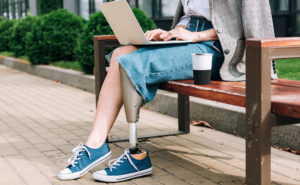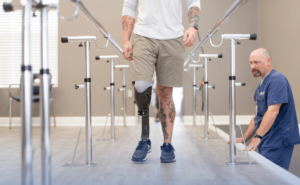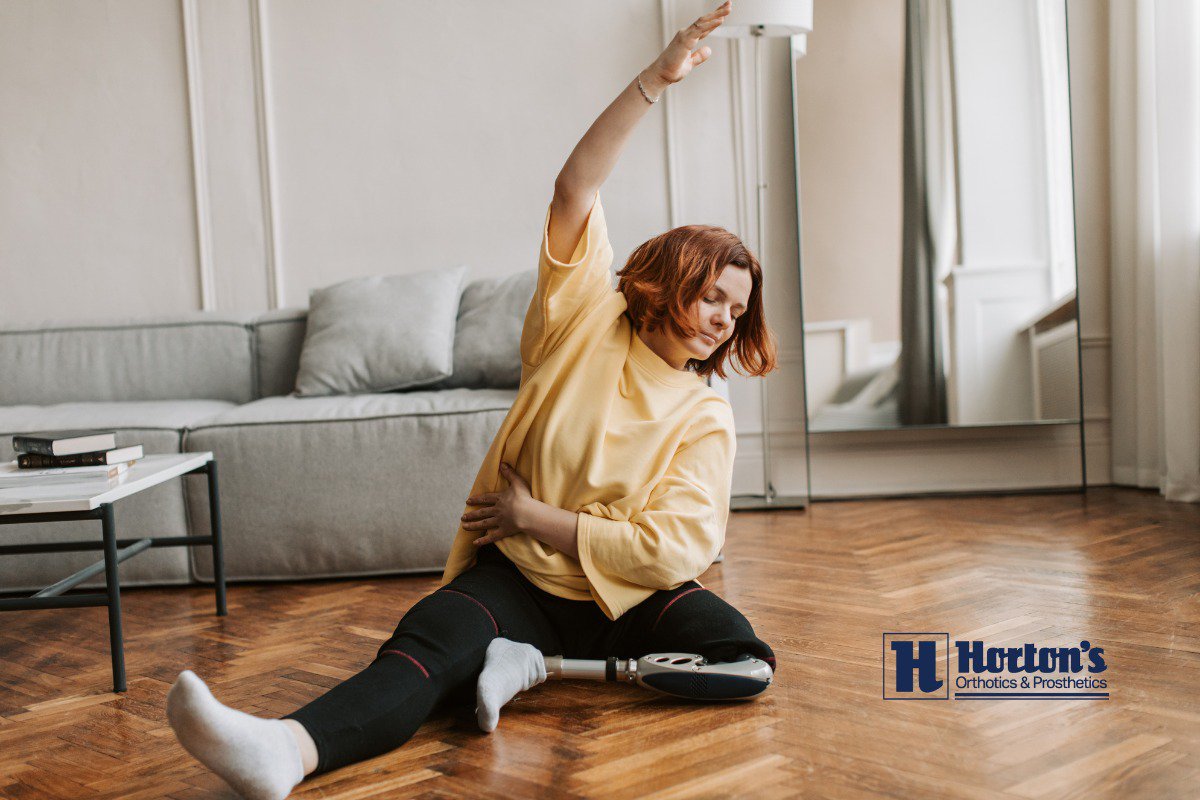
Adaptive fitness training is transforming how amputees and individuals with mobility challenges build strength, improve function, and return to the activities they love. Whether you're adjusting to a new prosthesis, working toward athletic goals, or simply want to move with greater confidence and less discomfort, adaptive fitness training can help. At Horton's Orthotics & Prosthetics, we believe the right prosthesis, combined with proper training, is your foundation for an active lifestyle.
Key Takeaways:
- Adaptive fitness training is personalized exercise designed for individuals with physical challenges, especially amputees
- It supports people with limb loss, spinal cord injuries, stroke recovery, cerebral palsy, and other conditions
- Programs focus on functional movement using strength training, cardio modifications, balance work, and sport-specific exercises
- Sports prosthetics like the Cheetah Xtend and Cheetah Xtreme enable athletic pursuits
- Proper prosthetic fit and maintenance are essential for safe, effective training
- Trainers work with prosthetists to ensure exercises complement your device
- Benefits include improved mobility, independence, confidence, and return to sports
- Programs are available for all ages, from pediatric patients to active adults
What is Adaptive Fitness Training and Who Benefits from It?
Adaptive fitness training is exercise specifically designed for individuals with disabilities or physical limitations. These programs address both physical and mental health needs while accommodating prosthetics, mobility devices, or recovery from injury.
Who Benefits from Adaptive Fitness Training?
People with physical challenges of all types, particularly those who are amputees, can benefit. This includes individuals with:
- Below-knee (transtibial) or above-knee (transfemoral) amputations
- Upper-extremity amputations (below-elbow, above-elbow, hand or finger)
- Hip disarticulation or hemipelvectomy
- Foot amputations
- Spinal cord injuries, stroke recovery, or cerebral palsy
- Balance issues, chronic pain, or limited range of motion
Amputees using prosthetics benefit significantly from adaptive training that strengthens residual limbs, improves prosthetic control, and builds the stamina needed for daily activities and sports.
How Does Adaptive Fitness Differ From Traditional Fitness?
Traditional fitness follows a standard approach, while adaptive fitness training adjusts every movement based on your specific needs, prosthetic device, and functional goals.
Certified adaptive trainers understand how prosthetics function and work. They consider socket fit, suspension systems, and component capabilities when designing exercises. For example, training with a sports prosthesis, like the Cheetah Xtreme, requires different techniques than exercising with a standard walking prosthesis.
Progress in adaptive fitness focuses on functional improvement: can you walk longer distances, return to hiking, play with your grandchildren, or compete in your sport? It's not just about numbers on a scale.
What Conditions Qualify Someone for Adaptive Fitness Services?
Anyone with physical limitations or prosthetic devices can benefit. This includes:
- New amputees learning to use their first prosthesis
- Experienced prosthetic users training for sports or higher activity levels
- Individuals with other mobility challenges, including wheelchair users
- Those recovering from stroke, injury, or surgery
- People with conditions affecting balance, strength, or coordination
Before beginning any program, medical clearance from your physician is strongly recommended. Your prosthetist should also be consulted to ensure your device is properly fitted and suitable for your planned activities.
At Horton's Orthotics & Prosthetics, we coordinate with adaptive fitness professionals to ensure your prosthesis supports your training goals. Our team provides education through our H.O.P.E. system and A.B.L.E. partnership to help you understand how to care for your device during increased activity.
Benefits of Adaptive Fitness Training for Amputees
Adaptive fitness training can help amputees improve daily functioning. When training is consistent, it builds physical strength, mobility, and independence. Plus, managing your prosthesis gets a little bit easier.
How Can You Improve Physical Strength With Adaptive Fitness?
Building strength in your residual limb can help you control your prosthesis more smoothly and with greater confidence. Increasing core strength supports a stable, natural gait and may reduce back pain.
Improving upper body strength can make transfers easier and boost your balance. Better overall endurance also helps you move through daily activities with less fatigue.
Does Training Help With Mobility and Independence?
Adaptive fitness training can improve your ability to handle stairs, ramps, and uneven surfaces, while also increasing confidence in community settings.
It can lower your fall risk by strengthening balance and stability. It also supports everyday independence, such as carrying groceries, lifting items, and completing household tasks.
How Does It Lead to Better Prosthetic Management?
You can build the skills to manage volume changes with socks and liners, recognize when adjustments are needed, and feel more confident troubleshooting minor issues.
Adaptive fitness can help you better understand how your device works and how to use it effectively.
Mental Health Benefits
Your emotional well-being can be greatly improved with the right adaptive fitness training.
Typically, the way it benefits your mental health can be split into 3 categories:
| Psychological Benefits | Social Connection | Quality of Life |
|---|---|---|
| Reduced anxiety and depression | Group training settings provided peer support | Returned to enjoyed activites and hobbies |
| Improved self-confidence and body image | Shared experiences with other amputees | Participated in family activities |
| Sense of accomplishment and progress | Reduced feelings of isolation | Improved sleep quality |
| Greater independence and self-reliance | Mentored newer amputees | Better stress management |
The journey begins with the right prosthesis and continues with dedication to training. Progress looks different for everyone: for some, it's walking a mile; for others, it's completing an Ironman triathlon. Both are equally valid achievements.
How Is an Adaptive Fitness Program Structured for Amputees?
A well-designed adaptive fitness program for amputees builds strength, balance, and endurance while teaching proper prosthetic use. Training typically progresses through specific stages.
The Core Components of Fitness Training With a Prosthesis
1. Flexibility and Balance
These exercises help you control your prosthesis and maintain stability:
- Seated stretches for hip flexors and hamstrings
- Core stability work to support prosthetic alignment
- Balance exercises with and without your prosthesis
- Range-of-motion work for your residual limb
2. Functional Strength Building
Strength training prevents muscle atrophy and improves prosthetic control:
- Residual limb strengthening for better socket fit and comfort
- Core exercises to support proper gait mechanics
- Upper body work for balance and transfers
- Resistance training adapted to your prosthetic components
3. Gait Training and Mobility
Learning efficient movement with your prosthesis:
- Walking pattern refinement on various surfaces
- Stair and ramp navigation
- Uneven terrain practice for outdoor activities
- Energy conservation techniques
4. Cardiovascular Endurance
Building stamina for daily life and sports:
- Modified walking or running programs
- Adaptive cycling with prosthetic-friendly pedals
- Swimming (with appropriate waterproof devices)
- Sport-specific conditioning
How Are Workouts Adapted Based on Skill Level?
New amputees typically begin adaptive fitness training, with basic exercises focused on residual limb conditioning and learning to don and doff the prosthesis correctly. Training also emphasizes safety, proper alignment, and building confidence.
As you progress, exercises become more challenging. Athletes training for sports may want to work with specialized devices from our sports prosthetics line, including:
- Cheetah Xtend and Cheetah Xtreme for running
- Versa Foot for multi-directional sports
- iLimb for upper-extremity athletes
- Rheo Knee or Power Knee for advanced mobility
And Horton’s offers a unique, personalized fit, based solely on the individual’s needs.
Can Adaptive Fitness Training Happen at Home?
Absolutely, and home-based training is often ideal, especially if:
- You're newly recovering and building initial strength
- You need frequent prosthetic adjustments
- Transportation is challenging
- You prefer one-on-one attention
Some adaptive trainers offer mobile services, bringing equipment to your home. Virtual training via video calls is also effective, with trainers providing real-time feedback on your form and prosthetic alignment.
Home programs typically use resistance bands, body-weight exercises, and minimal equipment. And, your trainer can demonstrate exercises that safely accommodate your prosthetic device.

Are There Specialized Programs for Amputee Athletes?
Yes, many organizations support amputees pursuing sports:
- Adaptive sports leagues for running, cycling, skiing, and more
- Prosthetic running clinics
- Amputee athletic training camps
- Para-athletic organizations
These programs often include coaches experienced with sports prosthetics and can also help guide training progressions specific to your sport.
Where Can Amputees Find Adaptive Fitness Programs?
How do I find adaptive fitness trainers who understand prosthetics?
Look for trainers with specific credentials:
- Adaptive & Inclusive Trainer (AIT) Certification from Certify Strong
- Experience working with amputees
- Willingness to coordinate with your prosthetist
Local resources include:
- Hospital-based rehabilitation programs
- Amputee support groups that offer fitness sessions
- Gyms with adaptive sports programs
- Veterans' organizations (for veteran amputees)
What Should I Look For In A Prosthetic-Friendly Gym?
An accessible facility should have:
- Wide pathways for wheelchairs or mobility devices
- No architectural barriers (ramps, not just stairs)
- Adjustable equipment that accommodates prosthetics
- Staff trained in adaptive techniques
- Changing areas with benches and adequate space
- Understanding that you may need to adjust your device during workouts
What Role Does Prosthetic Maintenance Play in Safe Training?
Regular prosthetic care is essential during fitness programs:
- Daily inspection for cracks, wear, or component issues
- Socket cleaning after every workout session
- Sock and liner management to maintain proper fit as residual limb volume changes
- Hardware checks for loose screws or worn parts
At Horton's, we provide comprehensive education on prosthetic care and maintenance. As your activity level increases, your prosthetic needs may change. We're here to make adjustments, perform repairs, and ensure your device supports your fitness goals safely.
Is Adaptive Fitness Available for Children, Too?
Yes. In fact, pediatric adaptive fitness is crucial for development in children with amputations.
Young amputees can gain confidence using prosthetic devices, helping to develop more age-appropriate motor skills. Additionally, this helps to prevent additional problems from forming due to inactivity.
Also, with play-based movement games and modified sports, children get extra social interaction and playtime.
Our team specializes in custom pediatric prosthetics and understands that children grow quickly. We work with families to ensure devices fit properly throughout growth spurts and support active lifestyles. Young amputees benefit from frequent fittings as they develop and their activity levels increase.
Your Path Forward with Adaptive Fitness Training
Adaptive fitness training offers amputees a proven path to strength, confidence, and an active lifestyle. Whether your goals involve daily tasks, outdoor adventures, competitive sports, or simply moving with less discomfort, adapted exercise can help you achieve them.
Success starts with the right foundation: a properly fitted prosthesis that supports your activity level.
How Does Horton's Support Adaptive Fitness?
While we're prosthetic specialists rather than fitness trainers, we're an essential part of your adaptive fitness team. We provide:
- Proper Fitting: We ensure your prosthesis fits correctly for increased activity
- Device Adjustments: We modify components as your strength and goals change
- Education: Our H.O.P.E. system and educational resources teach proper device care
- Sports Prosthetics: We fabricate specialized devices for athletic pursuits
- Ongoing Support: We're available for adjustments, repairs, and questions
We can coordinate with your adaptive trainer to ensure your prosthetic device supports your fitness goals safely. And if your training reveals fit issues or if you need a sports-specific device, we're here to help.
Adaptive fitness training is not about limitations; it's about possibilities. Every amputee's journey is unique, but the destination is the same: greater independence, improved health, and the ability to participate fully in life.
Ready to take your next step?
If you're interested in pursuing adaptive fitness:
- Ensure your prosthesis fits properly and is suitable for increased activity
- Get medical clearance from your physician
- Find a qualified adaptive trainer experienced with amputees
- Start gradually and celebrate every milestone
- Maintain regular communication with your prosthetist
At Horton's, we're committed to supporting your active lifestyle. Whether you need prosthetic adjustments, sports-specific devices, or guidance on caring for your prosthesis during training, we're here to help.
Contact Horton's Orthotics & Prosthetics
Learn more about our prosthetic services, explore our educational resources, and discover how we can support your journey to a more active, independent life.
Your fitness goals are within reach. Let's work together to achieve them.