Losing a leg changes how you move, but it doesn’t have to stop you. Mobility aids for amputees can help you walk, stay safe, and feel strong again. Choosing the right tools and aids is essential for regaining control, reducing pain, and enhancing confidence. This guide explores the most effective mobility aids and how they can support your journey to better movement and independence.
Key Takeaways:
- Common mobility aids include crutches, walkers, canes, and wheelchairs, chosen based on amputation level, strength, and balance.
- Below-knee (BKA) amputees often use crutches, canes, or knee scooters; above-knee (AKA) amputees typically need walkers or wheelchairs early on.
- Combining prosthetics with aids like walkers helps maintain mobility during recovery or rest days.
- Horton’s O&P prosthetic fittings begin with digital scans or molds; sockets, liners, and suspension systems need to be adjusted for comfort.
- Helpful home changes include roll-in showers, grip bars, lower counters, wider doors, and step-free entries.
- Assistive tools like stair lifts, smart controls, and transfer help support daily independence.
- Grants are available from Limbs for Life, the Amputee Coalition, and others; insurance coverage varies by plan and medical need.
- Physical therapy boosts muscle strength and confidence; emotional support from rehab teams and peers helps recovery.
Enhancing Daily Mobility After Leg Amputation
Mobility aids for lower limb loss include crutches, walkers, canes, and wheelchairs, each serving unique purposes during recovery and daily movement. Confidence often grows with the right mobility aid, enabling safe cooking, errands, and stair management. Physical therapy and training teach safe usage. For example, crutches should not press against armpits, and canes need to be used on the stronger side unless advised otherwise.
Daily Mobility with Mobility Aids for Amputees
- Wheelchairs support rest and long travel, available in manual or powered options. Features like limb supports and cushions improve comfort, especially when pain or pressure affects the residual limb.
- Crutches shift weight off the healing leg. Underarm crutches require arm strength, while forearm crutches offer better weight distribution and comfort. They assist with early walking and maintaining safety.
- Canes provide light support and are compact, ideal for users with strong balance. However, canes alone may not suffice for those requiring more support.
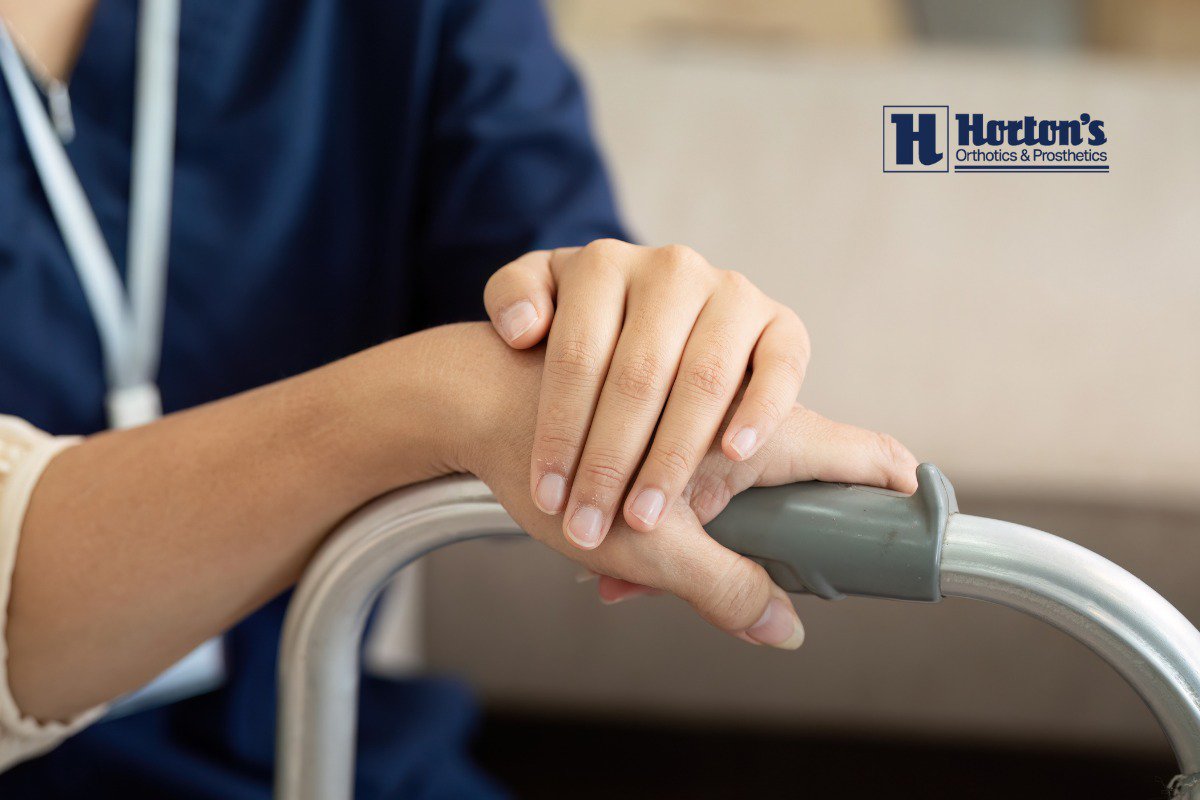
- Walkers offer maximum stability with four legs or front wheels, reducing fall risk and supporting weak limbs. Some include seats for breaks, enhancing confidence for standing and walking.
Supporting Daily Function: Walking Devices & Prosthetics
Walking devices alleviate strain on healing limbs and reduce the risk of falls, making short walks easier and offering better control in unfamiliar areas.
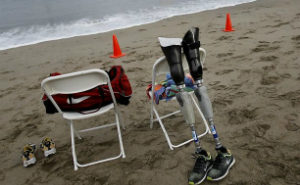
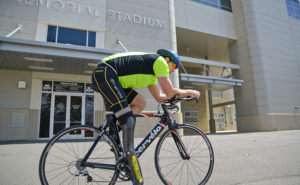
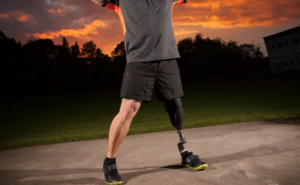
Using both mobility aids for amputees provides flexibility and supports recovery. A leg prosthesis helps regain walking ability, but rest days may require alternative aids, such as a chair or walker.
This approach balances progress with comfort, starting with a walker or crutches and gradually incorporating a prosthesis. Early rehab with suitable tools promotes independence. For more guidance, visit the guide on regaining independence after amputation.
Prosthetic Fitting Process at Horton’s Orthotics & Prosthetics
During the initial visit at Horton’s Orthotics & Prosthetics, individuals meet with a prosthetist to discuss daily routines and goals. A mold or digital scan of the residual limb is taken to construct the first socket. The prosthetist evaluates the skin condition, limb shape, and leg length, collaborating with the client to design a suitable prosthetic limb. The environment is calm, fostering comfort and trust. Further details on life post-amputation are found on Horton’s website.
Customization of Sockets, Liners, and Components
Sockets fit snugly against the limb, and liners are positioned between the skin and socket for padding, sweat reduction, and pressure alleviation. Horton’s utilizes 3D scanning technology to accurately map the limb for socket creation. Users test a trial model, providing feedback that allows for prompt adjustments.
Components such as the foot, ankle, and knee joints are tailored to match individual movement styles, promoting natural walking.
Suspension Systems and Stump Socks
Suspension systems ensure that the socket remains securely attached during movement, preventing shifts that could lead to discomfort. Types of suspension include suction, pull-on sleeves, pins, and vacuum-sealing systems.
Stump socks are worn over the limb, with various thicknesses available to manage limb size fluctuations, absorb sweat, and cushion sensitive areas.
For fittings or assistance, visit Horton’s contact page.
Home Modifications to Support Mobility Aids for Amputees
Furniture and tools such as wheelchair-friendly chairs, grab bars, smart controls, stair lifts, and transfer aids can greatly enhance comfort and mobility. Secure, firm-seated chairs and wheelchairs with cushions offer essential support. Smart home devices reduce physical strain and enhance safety.
For more tips on property readiness, visit Horton’s home readiness guide.
Efficient modifications and the right mobility aids can significantly improve movement freedom and quality of life. Consulting a mobility specialist or therapist is recommended for tailored guidance.
Priorities for Accessibility Updates
Key areas such as bathrooms, kitchens, and entrances should be tailored for safety and functionality. In bathrooms, grab bars, roll-in showers, non-slip floors, and raised toilet seats can enhance safety and ease of movement.
In kitchens, round knobs can be replaced with lever handles, counters lowered for seated use, and carts added for mobility. Entrances should have ramps or low-rise steps, expanded doorways, and smart lock systems for easier access.

Financial and Resource Assistance for Mobility Aids for Amputees
Organizations like the Limbs for Life Foundation and the Amputee Coalition are crucial in making prosthetics accessible. They offer grants that can cover part or all of the costs associated with prosthetics. To qualify, applicants often need to provide a doctor’s letter and evidence of limited insurance coverage. While some grants are targeted at specific groups such as children or veterans, others are open to everyone in need.
In addition to national organizations, local rehabilitation centers or support groups can be excellent resources for finding additional funding opportunities. Community centers and service groups sometimes donate used equipment, which can help bridge the gap for those in need.
Insurance Coverage for Mobility Aids
Insurance plans frequently cover some portion of mobility aids like basic wheelchairs or prostheses, though additional features might not be included. A doctor typically needs to assert that the device is "medically necessary" to obtain coverage.
Medicare can be a valuable resource, particularly for devices used in the home. Keeping meticulous records of purchase receipts and doctor letters is essential in case coverage is denied and an appeal is required.
Key Resources and Support
Finding the right resources involves knowing where to look and exploring every available option. By combining various tools and financial assistance methods, gaining or regaining mobility becomes much more achievable. For personalized support and guidance, consider visiting Horton’s Orthotics & Prosthetics contact page.
Discover Independence with Horton's Orthotics & Prosthetics
Creating a home environment that supports mobility aids is crucial for enhancing daily life. At Horton’s Orthotics & Prosthetics, we provide both financial and emotional support to help you on your journey toward independence and confidence. We offer more than just devices—our goal is to help you rebuild your life.
Whether you're exploring mobility aids or need personalized prosthetic fittings, our dedicated team is here to assist you every step of the way. Start your journey towards independence with us today. For more information and personalized assistance, please reach out to us directly through our contact page. Experience the power of movement and regain control over your life by exploring your options now and stepping towards a stronger, safer future.