Getting a new limb is a big step—but the first step matters most. Before you wear a prosthesis, your body and mind must be ready. That’s our starting focus. At Horton’s Orthotics and Prosthetics, we help you heal, shape, and prepare your limb. We’ll walk you through every stage of the prosthesis fitting process so you know what to expect, what matters, and how you can regain independence. Let’s begin.
Key Takeaways:
- You must ensure that the residual limb fully heals, is shaped with shrinker socks, and remains skin-healthy before fitting.
- Psychological readiness is important; the patient must want to use the prosthesis and trust it.
- Readiness assessments include limb shape, strength, joint mobility, and medical history.
- A mold or 3D scan creates a test socket for early fit trials and adjustments.
- A temporary prosthesis supports early mobility while the limb stabilizes.
- We build the final prosthesis with long-lasting materials after the swelling reduces.
- We achieve proper gait, comfort, and balance through alignment testing.
- Rehab includes physical and occupational therapy for everyday movement and function.
- Long-term success involves socket adjustments and regular follow-up visits.
- Upper limbs support grip; lower limbs support walking and balance.
- Tools like 3D printing, myoelectric parts, and sensors improve fit and control.
- Support groups, therapy, and goal-setting help with emotional recovery.
- Osseointegration connects a prosthesis directly to bone; it improves control but carries surgical risks.

Understanding the Prosthesis Fitting Process: A Complete Guide to Support, Preparation, and Success
For many individuals beginning the journey with an artificial limb, the prosthesis fitting process can feel overwhelming. Fortunately, with clear steps, expert care, and compassionate support, the path becomes manageable—and even empowering. At Horton’s Orthotics & Prosthetics, we design the entire experience to restore mobility and support every aspect of the patient’s wellbeing.
Whether you're a new amputee or preparing for a future fitting, this guide walks through each phase of the prosthesis journey—from early preparation and emotional readiness to high-tech innovations and long-term support.
Early Preparation Is Critical to a Successful Prosthesis Fitting Process
The very first step begins with recovery. Before fitting, ensure the residual limb fully heals, swelling is minimized, and the skin remains intact. If the area is red, leaking, or tender, fitting must wait. That’s because limb shape and skin condition directly affect the success of the socket.
To aid healing and support shaping, patients typically wear a shrinker sock. This compressive garment encourages a smooth, uniform limb contour and helps reduce fluid buildup. Daily wear ensures consistency and prepares the limb for the secure fit of a prosthetic socket.
The reason why healing and shaping matter is simple: a secure, comfortable socket relies on a limb that doesn’t fluctuate in size or shape. Fitting too early can lead to pressure points, movement instability, or even skin breakdown—often requiring the process to begin again.
Mental and Physical Readiness Also Shape the Outcome
Equally important is your emotional and physical state. Confidence and a positive mindset are powerful tools during the prosthesis fitting process. Using a prosthetic limb requires adaptation, strength, and resilience. Fear of falling or pain is common, but support systems such as peer groups and counseling can ease these fears.
At Horton’s, clinicians also assess your physical capacity. Even if one limb is missing, the rest of your body must compensate. Clinicians evaluate strength, balance, and stamina through simple movements and physical therapy. These early steps ensure that your body is ready to support a prosthesis safely and effectively.
Clinical Assessments Help Determine Prosthesis Readiness
Before the fitting begins, a comprehensive evaluation is conducted. This includes examining the skin, checking healing progress, evaluating joint movement, and reviewing your medical history. Conditions like diabetes or cardiovascular issues may require collaboration with other specialists to ensure safety during recovery and use.
In addition to medical assessments, patients typically undergo a preparatory phase. This can include wound care, strength training, posture correction, and even learning to lie flat to prevent joint contractures. Education about skin hygiene, compression garments, and stretching routines is also provided.
These seemingly small habits create the foundation for a smoother and more effective prosthetic fitting.
The Test Socket Stage Begins the Customization Process
Once your limb is ready and your strength is sufficient, the fitting begins with an initial mold. This is taken either with traditional plaster casting or a 3D digital scan. Both methods capture the shape and nuances of the residual limb, allowing clinicians to craft a socket that fits securely and comfortably.
The clinician uses this mold to create a transparent "test socket," also known as a diagnostic socket. It's designed for adjustments, allowing the clinician to identify pressure points or areas of discomfort. Patients wear this test socket during movement sessions, and gather feedback over several appointments.
The clinician makes adjustments based on your input and their observations, ensuring the final prosthesis is optimized from the start.
Transitioning from Temporary to Definitive Prosthesis
The prosthesis fitting process typically involves two major stages: temporary and definitive fittings.
The temporary prosthesis is used once your limb is stable enough to bear weight. It may not have cosmetic details or final components, but it allows you to relearn walking or using your arms, depending on the limb involved. This stage is crucial for building confidence and helping your clinical team understand your needs.
Once your limb fully stabilizes in size and shape, we create a definitive prosthesis. We design this version for long-term use, customizing it with lightweight, durable materials like carbon fiber or titanium. Depending on your lifestyle, we can also include cosmetic finishes and specialized functional components.
Throughout this process, precision alignment is critical. Clinicians assess how you walk or move and make adjustments to promote balance, minimize strain, and improve comfort.
You can read more about these stages on Horton’s Prosthetics Services page.
Rehabilitation Is Essential After the Prosthesis Is Delivered
Fitting the prosthesis is just the beginning. Rehabilitation ensures that you regain full function and prevent long-term complications.
Physical therapy plays a central role, teaching you to walk, balance, and move safely. For lower limbs, gait training starts with support bars and progresses to canes or solo walking. For upper limbs, therapy includes grip training and practical tasks like writing or dressing.
Occupational therapy helps you navigate daily life with your new limb. This might involve reorganizing your kitchen, learning to shave one-handed, or typing with a prosthetic hand. These adaptations allow you to regain independence and confidence.
Rehabilitation also includes setting clear progress markers: standing without help, walking pain-free, or putting on your prosthesis independently. These goals help keep you motivated and moving forward.
Long-Term Adjustments Are a Natural Part of the Process
Over time, your limb may continue to change. Weight fluctuations, muscle development, or daily swelling can all affect fit. That’s why routine follow-ups are so important.
Signs of a poor fit include sharp pain, red skin, pressure sores, or walking trouble. In these cases, small changes like sock thickness or liner type may help—but sometimes a new socket is needed.
Follow-up visits also include gait analysis, skin checks, and socket inspections. These appointments ensure that the prosthesis stays in sync with your body and lifestyle.
If you’re ready for a consultation or re-evaluation, contact Horton’s to schedule an appointment at one of their convenient Arkansas locations.
Fitting Approaches Differ for Upper and Lower Limbs
While the general prosthesis fitting process applies to all limbs, the goals and components differ based on whether the prosthesis is for an arm or a leg.
Lower limb prostheses often include feet, ankles, or knees. These components must bear weight, support balance, and enable smooth walking. In contrast, upper limb prostheses may feature hooks, myoelectric hands, or multi-articulating fingers, focusing on grip, reach, and fine motor control.
Evaluation also differs. For legs, clinicians focus on posture, alignment, and stride. For arms, grip strength, rotation, and reach are assessed. Similarly, rehab goals vary: walking and standing for legs; tool use and daily tasks for arms.
We tailor each fitting to match your lifestyle, whether it includes playing sports, typing on a keyboard, or lifting children.
Technology Is Revolutionizing the Prosthesis Fitting Process
Today, digital innovations are improving both speed and accuracy. Tools like 3D scanning and CAD modeling allow clinicians to create a perfectly contoured socket without trial-and-error. These tools reduce the number of appointments needed and improve comfort from the very beginning.
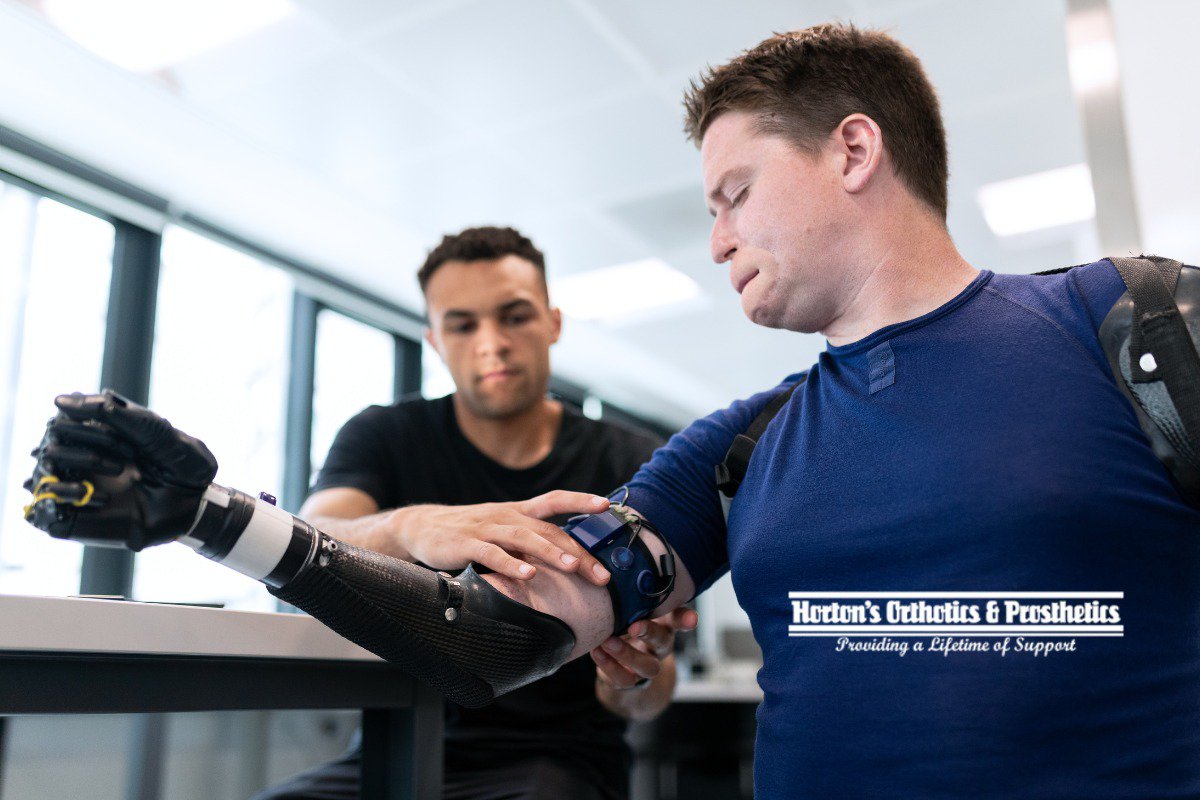
Myoelectric components are another major advancement. These devices interpret muscle signals, allowing you to control your prosthesis with natural movement. Whether it’s opening a hand or climbing stairs, these tools create smoother, more responsive interactions.
Additionally, some sockets now include smart sensors that adjust pressure throughout the day. Others track movement and provide data for future adjustments. These technologies are shortening recovery times and improving quality of life.
Emotional Support Is Vital Throughout the Journey
Recovering from limb loss is not just physical—it’s deeply emotional. That’s why Horton’s emphasizes emotional support as much as physical care.
Counseling and peer groups offer a safe space to process grief, anxiety, or frustration. Whether through one-on-one therapy or group sessions, these tools help build resilience and reduce isolation.
Patients are also encouraged to set small, realistic goals to stay motivated. This might mean walking to the mailbox or practicing grip strength with a therapy ball. Celebrating small wins builds momentum and confidence.
If you're looking for local support groups, Horton’s care team can connect you with resources in your area.
Osseointegration Offers a New Option for Some Patients
In certain cases, patients may explore osseointegration, a surgical approach that connects the prosthesis directly to the bone. This method eliminates the need for a socket altogether.
During the procedure, a titanium implant is placed into the bone, and the prosthesis connects externally through a small opening in the skin. This approach provides better motion, eliminates socket pressure, and improves comfort—particularly for those with socket issues.
However, osseointegration carries risks such as infection or bone stress. It’s best suited for patients with good bone health and strict hygiene routines.
If socket fittings haven’t worked well for you, this may be a viable option to discuss with your doctor.
Final Thoughts on the Prosthesis Fitting Process
The journey to a comfortable, functional prosthesis involves many phases—each one just as important as the next. From recovery and mental readiness, to casting, test sockets, therapy, and follow-up care, every step is designed to help you return to your daily life with confidence and comfort.
By understanding the full scope of the prosthesis fitting process, you can prepare for success and stay motivated through the challenges. With the right team, the right tools, and continued support, a better quality of life is always within reach.
Ready to Begin or Continue Your Prosthesis Journey?
Let Horton’s Help You Every Step of the Way
Whether you're just beginning or need expert adjustments, the team at Horton’s Orthotics & Prosthetics is here to guide you. From advanced fittings to lifelong care, we provide the support, education, and compassion you deserve.
Contact us today to book your consultation or request more information. Your recovery is a journey—and we’re here to walk it with you.